What the Four of Swords means in Tarot
The Four of Swords depicts a figure at rest in a quiet space. Its stillness is active recovery: the mind steps back from conflict so the next decision is not made from exhaustion.
The pause has an end. The question is what kind of rest would restore your energy and help you return with a clearer response.
- Rest
- Recovery
- Quiet
- Retreat
The card’s main theme
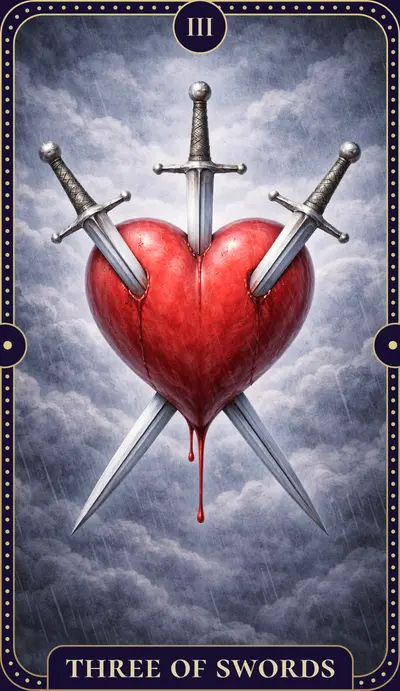
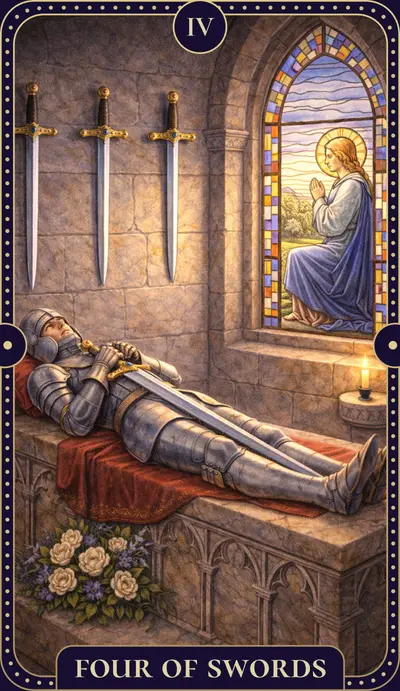
Inside a quiet church, the effigy of a knight lies on top of a tomb, hands pressed together in prayer, eyes closed. Three swords hang on the wall above him, pointing down, and a fourth lies along the side of the tomb. A stained-glass window shows a figure blessing a kneeling person. After the heartbreak of the Three, the suit stops for rest that is non-negotiable, and the stillness itself is the medicine.
How this card can appear in life
It appears during burnout recovery, sick leave, a retreat, sabbatical, meditation, a long sleep after a crisis or a pause between jobs. Rest, therapy, recovery and planning are all favored. People who match it know when to stop. The shadow is avoidance disguised as rest, or refusing to take time off until the body forces it.
The person’s inner state
Your battery is at two percent, and you know it. The mind wants quiet. Those three swords can hang on the wall a while longer; problems will keep while you recover.
The card’s question
- Which swords can you hang on the wall while you rest?
- What would true rest look like, not just distraction?
- Where is your body asking you to stop?
Interpretation examples
Medical leave for burnout
Upright, rest is necessary and will bring back clarity. Reversed, returning too soon could lead to relapse.
After a hectic election campaign
This is the need to rest and reflect before the next step. Reversed, restlessness makes it hard to switch off.
Planning a silent retreat
Upright, stillness and reflection will help you reset. Reversed, you may struggle to slow down enough to benefit.
Upright meaning
Upright, the knight on the tomb stands for rest, retreat, recovery, meditation and thoughtful preparation. Reduce unnecessary input and protect time for your nervous system to settle.
Reversed meaning
Reversed, the card can indicate restless recovery, burnout, isolation, or returning to action before you are ready. Create a realistic routine instead of treating rest as failure.
Advice
Schedule a defined pause and decide what you want to restore during it. When you return, take one measured action instead of trying to compensate for lost time.
Get a reading in the appIn love and relationships
For love, this is a pause for recovery: you are tired and need quiet to understand your feelings. A couple may need space, a pause in communication, time apart or a quiet period for reflection and healing, and sometimes simply rest within the relationship. By itself the card does not mean a breakup; what matters is whether the pause supports repair or turns into emotional distance. Treat each other gently, without pressure. Reversed, it shows a return to activity, but sometimes also a refusal to admit exhaustion.
Career and finances
In your working life it means rest, a pause after a big project, or the need to recover. Do not rush back to the old pace. In reverse, it points to coming out of the pause, but also burnout if rest was postponed too long.
As the card of the day
Your mind and body are asking for a pause today. Rest isn't a luxury right now; quiet and sleep will restore you better than pushing through exhaustion.
Sign of the dayNotice the urge to go to bed early or cancel a plan, and the relief when you let yourself.
- Love
- Relationships need a break from hashing things out too. Spend a calm evening with no serious talks.
- Work
- Lower the bar for today: do what's essential and leave the rest for when you've recharged.
- Money
- Money decisions made while drained rarely feel right later. Let anything non-urgent wait until you've rested.
What would change if you let yourself rest without feeling guilty?
Notable card combinations
- The Hermit
Retreat for reflection and healing.
- Ten of Wands
Rest after overwork.
- Six of Swords
A calmer period after difficulty.
- The Tower
Recovery after a crisis.
- Three of Cups
Time with friends restores energy.
- Knight of Swords
Rushing back too soon.
FAQ
What does the Four of Swords mean in Tarot?
Rest, recovery, retreat and reflection: a pause after strain. It encourages restoration before another demanding decision or action.
Is the Four of Swords a yes or no card?
Unclear for now: the knight lies motionless on the tomb, so it is a time to pause and recover before taking action. Reversed, the answer shifts to “likely yes,” as you regain energy and are ready to move forward.
Does the Four of Swords mean illness?
It can point to recovery from illness or to the need for rest, but more often it describes mental exhaustion and the importance of recharging. A reading is not a diagnosis: physical symptoms belong with a doctor.
What does the stained-glass window mean?
The window shows a figure blessing someone who kneels in front of it. Placed above the resting knight, it frames the pause as protected and permitted: you are allowed to stop, and stopping counts as part of recovery.
What does the reversed Four of Swords show?
Restlessness, burnout, refusing to rest or returning to activity after a break. It can mean the body is forcing you to stop.