What the Three of Swords means in Tarot
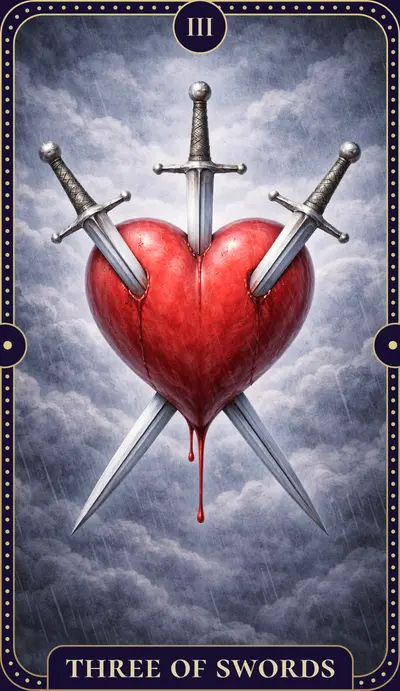
The Three of Swords portrays a heart pierced by three blades and names an experience that hurts. The stormy background suggests that grief can cloud perception, while the image still asks for honest recognition.
This is pain with an end point, not a forecast of permanent suffering. The card can point to disappointment, separation, difficult feedback, or a truth that clears the way for recovery when it is faced with care.
- Heartbreak
- Grief
- Separation
- Painful Truth
The card’s main theme
A red heart floats against a gray, stormy sky, pierced by three swords, while rain pours down behind it. There are no people in the image and no explanation; heartbreak is shown without softening. The card doesn’t ask why it hurts. It acknowledges that it does, and that this storm will eventually pass.
How this card can appear in life
It shows up after a breakup, a betrayal, a miscarriage, the death of a loved one, harsh criticism or a painful truth that breaks your heart. Grief counseling, therapy, writing and honest conversations all help here. The card describes the need to feel the pain instead of avoiding it. The shadow is holding on to hurt so long that it shapes your identity.
The person’s inner state
Sadness arrives as a physical ache behind the ribs. There may be anger or shock beneath it. The rain in the image suggests that tears are part of healing.
The card’s question
- Which of the three swords hurts the most, and who put it there?
- What do you need in order to let yourself grieve?
- What is the storm washing away?
Interpretation examples
Discovering a partner’s affair
Upright, the pain is real and needs space to be felt before any decision. Reversed, the healing process has begun, and you can start to think clearly.
After a pregnancy loss
The card acknowledges deep grief and the need for gentle support. Reversed, you are slowly finding your way back to hope.
A cruel remark from a close friend
Upright, the words cut deep, and it’s okay to feel hurt. Reversed, an honest conversation can repair the damage.
Upright meaning
In the upright position it points to heartbreak, grief, painful honesty or a necessary release. Let the feeling be real, but do not let one painful event define your entire future.
Reversed meaning
Reversed, the card can show healing and forgiveness, but also lingering pain or avoidance of a necessary conversation. Notice whether you are processing the wound or simply pushing it out of sight.
Advice
Name what hurt, seek a safe place to process it, and separate the event from the story you are telling about yourself. Healing can begin with one truthful conversation or a quiet boundary.
Get a reading in the appIn love and relationships
In relationships it stands for heartache: a breakup, betrayal, conflict, a painful conversation, disappointment, or trust that has been wounded. The card does not speed up healing, but it acknowledges that the pain is real. What matters next is where your focus goes: grief, the truth that came out, repair, or release. When reversed, it shows gradual letting go, forgiveness, and a return to life, though sometimes a return to an unresolved grievance.
Career and finances
Painful news at work: a rejection, a conflict, a layoff, criticism. Separate facts from emotions and do not treat a setback as a verdict on yourself. Reversed, the card points to recovery after a loss, lessons learned, and confidence gradually returning.
As the card of the day
Today may touch something that hurts: a disappointment, harsh words, an uncomfortable truth. The pain is real, and naming it gently is the first step toward it easing.
Sign of the dayFeelings rise suddenly because of a song, a phrase, or a memory. Let them out.
- Love
- A painful truth or sadness in the relationship is possible. Say what hurts plainly, without blame, and give each other time.
- Work
- Criticism may sting, but it can hold something useful. Separate the facts from the feelings.
- Money
- Don't spend money to numb the pain. Put big purchases on hold until you feel steadier.
Which pain needs some room today so it stops running the show?
Notable card combinations
- The Tower
Sudden, painful revelation.
- Five of Cups
Deep grief and loss.
- The Star
Healing after heartbreak.
- The Lovers
A painful choice in love.
- Ten of Cups
Family pain or disappointment.
- Queen of Swords
Wisdom born from pain.
FAQ
What does the Three of Swords mean in Tarot?
Heartbreak, grief, separation, a difficult truth or painful feedback. The card also invites honest processing and a gradual path toward healing.
Is the Three of Swords a yes or no card?
No: three swords pierce the heart under a pouring rain, and the situation is painful or disappointing. Reversed, the answer improves to “likely yes,” because healing is beginning, and the hurt is easing.
Does the Three of Swords always mean a breakup?
Emotional pain comes in many forms, and a breakup is only one of them. The card may equally describe grief, betrayal or a hurtful truth.
How long does this kind of pain last?
The card gives no timing. It describes an acute phase that passes, and how long that phase lasts depends on how much you let yourself feel and heal.
What does the reversed Three of Swords show?
Healing, forgiveness, releasing grief or recovering from heartbreak. It can also point to suppressed pain that still needs attention.