What The Hierophant means in Tarot
The Hierophant is the fifth card of the Major Arcana and represents systems of knowledge, teaching, ritual, and shared values. The card can point to a mentor, institution, or tradition that gives experience a framework.
The question it raises is practical: which principles genuinely support your life, and which habits are being followed only because they are familiar?
- Tradition
- Learning
- Mentorship
- Values
The card’s main theme
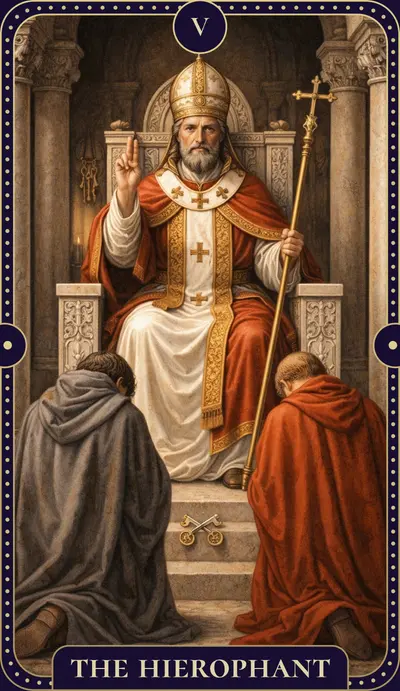
Card V stands for what is passed from hand to hand: traditions, teachings and shared rules that let people belong to something older than themselves. Two shaven-headed monks kneel at the feet of a pontiff enthroned between gray columns; he wears a three-tiered crown and red robes, lifts two fingers of one hand in blessing and grips a staff topped with a triple cross, while a pair of crossed keys rests on the floor in front of him. The keys suggest that the doors of knowledge open through learning, the kneeling figures show the bond between teacher and student, and the pillars echo the structure of an institution. Which rituals still carry meaning for you, and which are just autopilot?
How this card can appear in life
Look for him in a church wedding, a university degree, an apprenticeship, a professional licensing exam, joining a union or a religious community, or accepting advice from a mentor who has done this before. He favors education, law, medicine, the clergy and large organizations. In relationships he points to formal commitment and family expectations. His shadow is dogma: following the rules so closely that you lose sight of why they exist.
The person’s inner state
Belonging settles over you like a familiar coat. You want to do things properly and be recognized by people you respect. Sometimes this means doubting your own path because it isn’t the approved one. The two keys at his feet suggest that one tradition can open a door while another quietly keeps it shut.
The card’s question
- Which rule in your life do you follow without remembering who made it or why?
- Who has been a real teacher to you, and what did they pass on that you still use?
- Where would you choose your own path if you weren’t worried about disapproval?
Interpretation examples
Choosing a university
Upright, it favors an established institution with a solid reputation and a clear path to qualification. Reversed, it suggests that a non-traditional route or a smaller school might suit you better.
A family that expects you to marry within its faith
The card describes strong expectations tied to tradition and belonging. Reversed, it points to a personal choice that doesn’t match the family script and a need to talk it through openly.
Finding a mentor at work
Upright, it’s a good time to learn from someone experienced and follow proven methods. Reversed, it warns of a mentor who demands loyalty more than they share knowledge.
Upright meaning
In its upright form, the card supports study, guidance, community and learning from an established method. It can be useful to seek qualified advice or commit to a practice that builds understanding over time.
Reversed meaning
Reversed, the same structure can feel like a cage: dogma, pressure to conform, or a conflict between personal values and an external authority. Question rules thoughtfully before accepting or rejecting them.
Advice
Find the principle, teacher, or reliable method that can support your next stage. Keep what is useful, but make sure the values you follow are genuinely your own.
Explore a related Tarot spread Get a reading in the appIn love and relationships
In love this is a relationship built on shared values and serious intentions: meeting through family or friends, an engagement or marriage, agreements about the future, often with the approval of family or community. The card values tradition and an open talk about principles. It can also describe a relationship shaped more by duty than by choice. When reversed, it shows pressure to do things “the proper way,” clashing beliefs, or a wish to live by your own rules rather than someone else’s.
Career and finances
In career matters, this card stands for mentorship, training, exams, certification, and joining an established structure such as a corporation, a university, or a profession with clear standards. It advises following proven processes and learning from experienced colleagues. Reversed, it points to bureaucracy, dogma, and a reason to revisit rules that no longer work.
As the card of the day
The Hierophant points you toward what has already been tested: expert advice, proper training, rules that exist for a reason. A mentor could help today, or someone may come to you for guidance.
Sign of the dayExpect good advice from someone more experienced, or a book that lands in your hands right when you need it.
- Love
- Shared values, family, and serious intentions come to the front. Introducing a partner to family or talking about what you both believe in comes naturally.
- Work
- Learning, mentoring, and doing things by the book. If you're unsure how to proceed, a colleague who has been there can save you time.
- Money
- Pick proven options over trendy ones: an established bank, a clear contract, a qualified advisor.
Whose experience do you trust, and what could you ask them today?
Notable card combinations
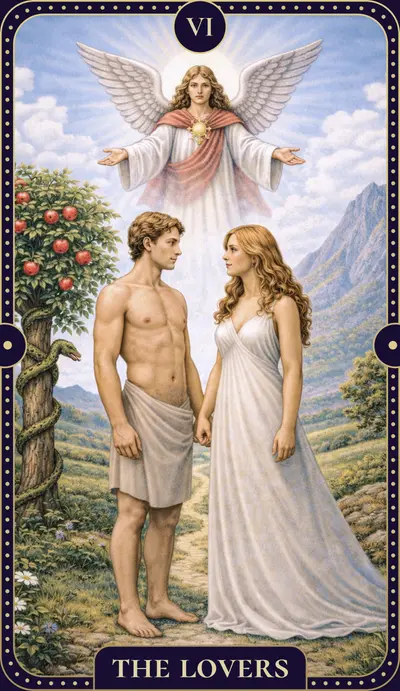
- The Lovers
A formal union, often a wedding with traditional ceremony.
- Three of Pentacles
Learning a craft under the guidance of a master.
- Ten of Cups
Sunday dinners where three generations still sit at one table.
- The Devil
Blind obedience to a group or authority that doesn’t have your interests at heart.
- Eight of Swords
Rules you’ve outgrown still feel binding.
- Knight of Wands
A rebel pushes against the established way of doing things.
FAQ
What does The Hierophant mean in Tarot?
Tradition, learning, shared values, mentorship and established systems of knowledge. The card often encourages thoughtful guidance and study.
Is the Hierophant a yes or no card?
Likely yes: the answer is favorable when you follow the established path, the official process or the advice of someone experienced. Reversed, it leans “likely no,” because rules are working against what you actually want.
Is the Hierophant the same as the High Priestess?
No. He focuses on shared teachings, institutions and external traditions: he faces his students, and the crossed keys at his feet open official doors. The High Priestess is more closely associated with private intuition and inner knowledge, kept behind a veil.
What does the Hierophant mean as a person?
A teacher, mentor, priest, professor or senior colleague who knows the rules and passes them on. At best he gives you a tested method and a place in a community; at worst he demands loyalty more than he shares knowledge.
What does the Hierophant reversed mean?
Either rebellion and finding your own way, or rigid dogma and a mentor who abuses authority. Look at whether you are freeing yourself or simply reacting against rules.