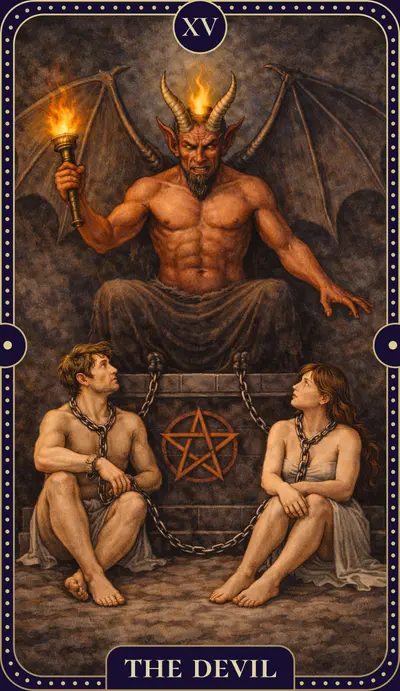
What The Devil means in Tarot
The Devil is the fifteenth card of the Major Arcana and represents attachment, temptation, material force, and unconscious desire. The chains in the image are not permanently locked; they ask what holds you and whether you can still see your choice.
In a Tarot reading, The Devil is not automatic proof of evil. It can illuminate dependency, unequal power, fear of losing control, or passionate energy that needs direction without harming you or anyone else.
- Shadow Self
- Desire
- Materialism
- Attachment
The card’s main theme
In a spread, The Devil points to desire, dependence, unequal power, and the habits that keep a person choosing what they already know is costly. Its mature expression is neither blind optimism nor fear. Choose to work with the attachment that promises relief at too high a price while staying attentive to a rushed interpretation and to the consequences for everyone involved. Use the image to widen reflection, not to outsource responsibility for the decision.
How this card can appear in life
At work and at home, The Devil may look like compulsive work, debt, jealousy, status chasing, a controlling bond, or a contract that looks attractive while shrinking your choices. Start by working with the attachment that promises relief at too high a price. Keep the experiment reversible where possible, and return to the facts if a rushed interpretation becomes louder than the actual behavior. Give the attachment that promises relief at too high a price a defined trial, then decide from what actually happened. Return to the attachment that promises relief at too high a price after a few days and note what changed.
The person’s inner state
The emotional experience of The Devil can be a knot of longing and fear in which quick relief keeps an old behavior alive. Notice what your body, values, and current relationships are telling you, then work with the attachment that promises relief at too high a price. This distinction protects your agency while you learn what the attachment that promises relief at too high a price means in context. Name the feeling precisely, then choose a response that serves your current values.
The card’s question
- What is the attachment that promises relief at too high a price revealing about my current priorities?
- What would make my response to the attachment that promises relief at too high a price more sustainable?
- How can I name the need underneath the pattern and build one concrete limit with support without rushing the outcome?
Interpretation examples
What would a grounded reading of The Devil look like here?
Use The Devil as a prompt to name the need underneath the pattern and build one concrete limit with support. Check the result against daily behavior, especially if shaming yourself instead of changing the conditions that maintain the pattern starts to shape the choice.
How might the attachment that promises relief at too high a price affect my next practical step?
Translate the attachment that promises relief at too high a price into one observable decision. Keep the scale modest enough to learn, and do not treat a single result as a permanent verdict.
What would make this advice sustainable?
Make name the need underneath the pattern and build one concrete limit with support part of a realistic rhythm rather than a dramatic promise. Revisit the plan when new evidence changes the situation.
Upright meaning
The Devil upright points to strong attraction, temptation, ambition, or a situation where comfort comes at a high price. Look honestly at the need you are trying to meet and the boundaries it requires.
Reversed meaning
The Devil reversed can indicate loosening an attachment, acknowledging a problem, or denying what has been controlling you. Choose one step that restores autonomy and clarity.
Advice from The Devil
Name the desire or habit that takes more freedom than it gives satisfaction. Set one concrete boundary and keep support available for a steady change.
Explore a related Tarot spread Get a reading in the appThe Devil Tarot meaning in love and relationships
In love, The Devil can show intense chemistry and passion, as well as control, jealousy, or dependency. Reversed, notice the possibility of leaving an unhealthy dynamic and rebuilding boundaries.
The Devil Tarot meaning in career and finances
For career and finances, the card highlights ambition, material incentives, and the price of an agreement, sometimes including an exhausting attachment to work or status. Check the terms before trading freedom for a short-term gain.
Notable card combinations
- The Lovers
With The Lovers, The Devil connects the attachment that promises relief at too high a price to a concrete choice and a visible next step.
- Strength
Strength adds a counterpoint: test the attachment that promises relief at too high a price against facts, behavior, and the limits of the situation.
- The Tower
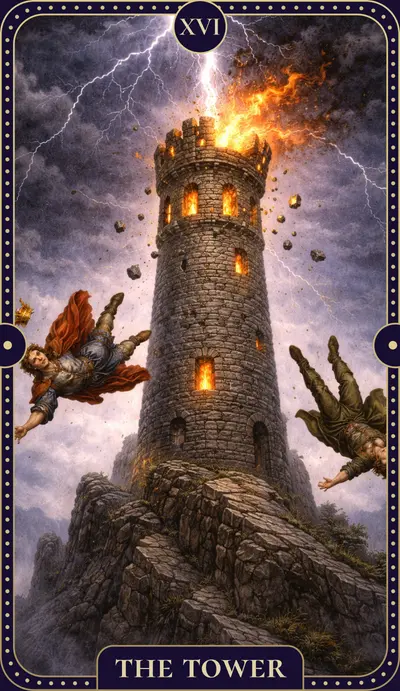
Read these cards together as an invitation to let the attachment that promises relief at too high a price become a practice rather than a passing mood.
- Temperance
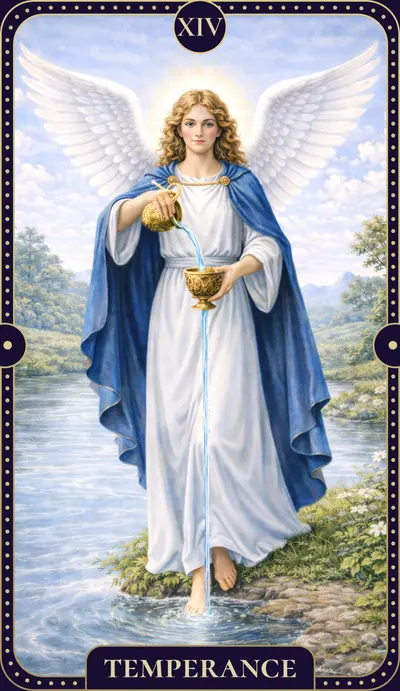
Temperance brings a different tempo to The Devil; let the pairing show what can be changed and what needs patience.
- Justice
This pairing exposes the boundary between the attachment that promises relief at too high a price and shaming yourself instead of changing the conditions that maintain the pattern.
- The Star
The Star keeps the message grounded in ordinary life, where The Devil must become a sustainable practice.
The Devil Tarot card FAQ
What does The Devil mean in Tarot?
The Devil represents strong desire, attachment, temptation, material interest, or a power dynamic. It asks you to see what limits your choice rather than reduce the situation to a moral label.
Does The Devil always mean something negative?
No. It can show powerful passion and motivation, while also pointing to their cost and the risk of dependency. The question, position, and other cards shape the meaning.
What does The Devil illuminate in this reading?
In a spread, The Devil points to desire, dependence, unequal power, and the habits that keep a person choosing what they already know is costly. This card points to a live pattern, not a fixed verdict; the question and surrounding cards locate it.
How can I use The Devil as practical advice?
Work with this card by choosing to name the need underneath the pattern and build one concrete limit with support. Keep the decision tied to your actual time, resources, boundaries, and consent.
Does The Devil guarantee a particular outcome?
No. Tarot describes patterns, pressures, and possibilities. Your choices, other people’s agency, and changing circumstances still shape what follows.
What is the shadow side of The Devil?
The shadow appears when shaming yourself instead of changing the conditions that maintain the pattern. Notice the cost without turning it into shame, then return to name the need underneath the pattern and build one concrete limit with support as a more honest adjustment.